Wednesday, February 17, 2010

february.

I have since moved back to Tennessee and have switched focus from whitetails to the beginnings of the growing season, turkeys, and the rod and reel. For turkeys, the goal is simple. I have never taken a bird and am committed to success this March and April. This is all dependent on the strength of my interest in a month, but that is the idea for now.

 A more concrete and immediate affair of interest is the beginning of the spring growing season. One of my goals is to increase my personal involvement with The Lady’s garden, of which I am already down a few points for missing the seed-buying trip. She knows more than me anyhow, so it will probably work out better that way.  The CSA begins in May also, but the signups are now and that at the very least stokes some anticipation. The snow-dustings and soft morning frosts still remind me that it is February, but afternoons feel like they are stretching and waking up for spring.

The fun part is the full freezer in conjunction with the garden. Sam and I went back to the cooler the week after the season closed and spent a good three hours slicing and gathering venison to be processed. The results are firmly packed away Tetris style in three freezers.  Taylor gets to eat all he can until I come get what I need. Hell of a deal for the both of us.

Bought some new fly gear. New rod and reel, we’ll see if I need money or gear in the coming months.  I’m leaning toward keeping it.  Logic says that I’ll get to make money for the rest of my life, and there is a finite amount of fly rods in the world. It would be a shame to let any of them slip out of my grasp. There is a little part in every fly-man that truly believes that whoever dies with the most rods wins.  I can’t help it.

February is usually the doldrums for the hunter/gatherer. Clay got a new bird dog, and hopefully he gets to hunt over him in the final two weeks of quail season in Alabama. Its a beautiful dog with a strong name. I think that most have a certain affinity for hunting dogs. Strange how the relationship changes a bit when utility is added to the equation, but I can't help but look forward to August and doves thinking about how I don't have to run after those damn birds any more. There is nothing more ridiculous that an grown man hurdling sage and stick with shotgun pointed straight in the air in search of downed fowl.  I'm a lanky six foot three and am quite worthless in this capacity, but I will retrieve to hand and I don't eat my own turds. Its all about perspective I suppose. 

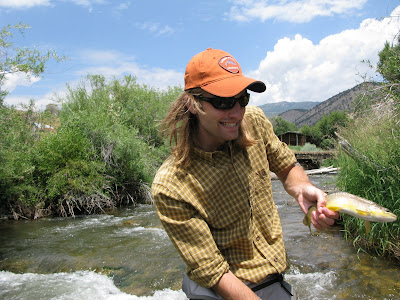
In the meantime, I think I'll write some, learn to tie some new fly patterns, and enjoy tobacco that actually tastes like tobacco. Cheap beer, venison steaks, cold hands, and not being stressed about not being in the woods. It isn't all poetic, but I thought this picture was great, even though it is plain. I have some friends who are incredible photographers, and I would love to make some trips with them and hopefully show off some of their work.  Thinking about learning more about bird watching, would love to know where to start. That’s your queue, many thanks. 

Happy Hunting.

r. 

Thursday, February 4, 2010

tally.

It is raining in the South this week. I suppose that today is Sunday and that means the Alabama Whitetail season is coming to a close in exactly a week and six hours, which is a both saddening and hopeful. I knew this day was coming, and I have been putting this post off because I am nervous about how I want to portray myself and what I have taken this season. The last thing that I wish for the Digest to become is a tally sheet or announcement board. I suppose I just want to be respectful of both the game and others who don’t share the same perspective. I also think that I want the focus to be on the season, on participating with nature.

Sam and I were at his farm two weekends ago with some other friends. The harvest that weekend was beyond anything that I could have anticipated. Each member of the party took an animal, which makes for a memorable weekend no matter what else goes on. Sam is a great hunter, and apparently has some philosopher in his bones. “I like to let the woods just happen. Just be patient and let everything come to you instead of the other way around.” We were still-hunting a creek bed on conceivably the worst day to do it. The ground was frozen and crunched under every step. At the very least we ended up with a quotable morning. That is certainly making a day of it.

This season I had the pleasure of hunting for dove, quail, duck, deer, and pig. I would say that this is my most productive season, but I am not selling anything so we’ll just leave the mechanical language out of it. I have taken two deer, both does, and I could not be happier about it. I took my first Mississippi Whitetail in December, which was a load off of my back. Now I can just enjoy myself over there instead of settling a score. Duck hunting was slow, but I mostly show up for the jokes anyway. I love bird hunting, and if you have never experienced a South Georgia style quail hunt, then dammit I think you should get moving. Doves may have been my favorite, simply because being that close to good friends and shooting three boxes of shells certainly makes a weekend of it. Hay bails be damned, we were the only ones shooting birds out of a group of thirty.

It is nice to wake up in the morning and not be dead tired dragging yourself to the field, or feeling guilty for not doing so. Now I just can’t, and that comes with a strange relief. I suppose that one of the best parts of the fall and winter hunting is honing in on the seasonal aspect of it. It is steady, has its own slow rhythm. Summer is just so distracting. People are all over the place, and even nature moves faster.

I was walking through the woods on Saturday morning and the ground was wet. It was warm and a storm was about to pass through. I climbed the tree and took a little pleasure in the sound that my wet boots made on the steel as I got settled. Sometimes the most insignificant of occurrences lead to mind-crushing self-awareness. I think most people have those moments, where the world pauses and you have that little slip in the space-time continuum to truly love being alive. It is that moment, when your boot squeaks 25 feet up an old planted pine, that the stillness and the smells of the early morning are finally soaked in by your soul. It happened there, at 6:15 in the morning, just when the sleepy sun was reaching through the trees, stretching out the stiffness in its back from its steady rest.

The hardest part of writing this is trying to make everything sound poetic, sound like what it actually is, a matter of life and death. But I don’t really know if that is how I feel about it now. I think that the way of the hunter and the grower and the gatherer is the way that it is supposed to be, and the more you build your life upon those things the less fantastic it becomes. Of course there are days that it all makes sense, that the cosmic alliances become apparent and the gravity of the entire world is made known through one animal taking the life of another. Harvest is a mystery, no matter the season and no matter the pursuit. But sometimes in the end it’s just that things that are spectacular are just plain ordinary, and that is the way that it is supposed to be. The violence doesn’t get to me like it used to, and I certainly have a different sort of gratification than I had four years ago. Now, it is just more satisfying to know that food doesn’t come from a grocery store, and that hunting alone means running the risk of missing the point. Life and death are truly just parts of life, and the more that I learn that the more balanced my perspective becomes, and life grows more satisfying each day. It’s a tight-rope act balancing both gravity and constancy.

So now, I hope that each day I and we can become reconnected with the rhythms of the spring season. My hope is that we can all be blessed with those tiny moments of awareness, and that the harvest from the ground is as plentiful as the harvest of game.

Happy Hunting.

r.

Tuesday, January 5, 2010

agonizing and excellent.

I have been spending my time lately thinking about writing. Not actually writing, mind you, but mostly about thinking about it. Granted, good writing cannot happen until the pen touches the pad or the fingers dance on the keys, but I figure that there must be some sort of reflection on the craft every once in a while. I read something interesting by songwriter Chris DuBois. Writers have the gift of perception, the craft can be developed. Perception, though, has a few faces, and that is what makes writing and writers different and worth exploring. 

Part of my meditation on writing and perception dealt with the medium. I have pondered for some time now buying a stack of legal pads and a box of Dixon Ticonderoga #2 yellow pencils and setting about becoming a man that exclusively deals with the handwritten prose. Wendell Berry is my favorite writer. So versatile, and so much to say. He only uses the pen and pad. Something about an expensive machine really cheapens the process. Perhaps its just the rationalization of the the organization and gurgitation of thought that kind of rubs me the wrong way, but then again its probably just the difference between a shovel and a back-hoe.  Tools that perform the same task in different ways.  Or, the difference between a graphite and bamboo rod. The bamboo rod is slower, more delicate, more organic, more calculated, and requires a definitive sense of process and result. The graphite is more of a brute, the result of years of development and error, requiring of the beginning angler only a few hours  on a lake to competently shoot line forty and fifty feet. Its about volume. The legal pad requires for sentiment and nostalgia, two important themes that appear in what I write, along with a delicate hand and a calculated, committed course of thought and narrative. It also requires legible penmanship, something that I lack terribly. I began recently to write in all caps, but soon my careful letters gave way to the same bullshit turkey dusting results as my former lowercase attempt at communication.

Back to the rods. The computer, and the graphite rod, while they are easier and faster, perhaps give me the chance to spill it all to a fast and volumous medium, catching thoughts that normally would fall to the basement of my brain before my hand could record them. I think of my best writing, and it has come in either of two settings , including hybrids of each. The first is when my fingers fly as my mind dumps to the keys. Some of my best work, including published work, has come this way, as if it had already been created. Other examples or descriptions of this setting are journal thoughts that I have sort of stewed and developed for a time, almost as if I have already written them consciously and orally, as if they need recording, not writing.

The other favorite writing has come as a result of the pen and pad. I think of being in Alaska and choosing to sit for two hours to develop a thought. Its more narrative, more descriptive, more careful, more calculated, because once it goes to the paper, it sure as hell isn't coming off. It is both agonizing and excellent.

I would love to hear your thoughts. 

r.


boots.

Things I have learned: emailing your ex-girlfriend from the deer-stand produces confusing, if not undesirable results, and no matter how impressed you are with your trophy, coyotes with mange are not welcome in duck camp.

And, you can tell a lot about a man by his boots. I read an article by someone who was billed as some sort of expert backpacker, which I suppose is someone who is just really good at camping. I guess that’s just a weird distinction, because if you can set up a damn tent, not starve, pick up your trash and return uninjured, you’ve pretty much nailed it.

Anyway, he was writing about hiking some famous trail that ends here in the south, and was giving recommendations for the proper apparel. First of all, if you need to go out and purchase a new wardrobe and all new equipment to hike a dirt road, then odds are you should just stay home. What I did learn, however, is that you can somehow purchase the equipment necessary for expert status and peak performance and at the same time consequently abstain from patronizing anything that contains cotton, wool, or leather.

The recommended boots, however, were not boots at all. Instead, my man prefers what he calls a “trail-running” shoe for distance hikes, citing the light-weight as a benefit for distance hikers. I disagree (mostly don’t care, but I suppose I have spent a lot of space writing about this, so lets wrap it up). For me, it’s about soul. Cotton comes from the ground, wool from a sheep, leather from hide, but for the life of me I can’t figure out what the hell a poly-ester is. The definition says something about organic or free fatty acids, and I assume there are multiple of these things (hence ‘poly’), but it might as well be magic. Nylon is my least favorite of these miracles of modern chemistry, so damn slippery, and it always comes in the least natural color that you can imagine, like canary yellow, bright blue, some trendy red and black spandex, etc. You get the point. 

And not to say that I don’t use these materials. I have a polyester jacket that I use as a rain slicker, and it keeps me pretty warm for an Alabama winter, and the point isn’t that these new materials are bad, because they aren’t. I just don’t have any sort of emotional connection to them.  What the natural materials lack in performance they make up in affinity. There is sort of a natural sympathy, a natural history to them. Perhaps because they have been gotten, not created out of thin air, and perhaps because this history not only is imbedded in the object of purchase, but in something much more consequential, like an animal or the ground.

It is also a shame that the trail-runners don’t partake in the experience that is a good pair of boots. I got mine after seeing a friend with the same pair. I bought them used, which suits me. They are no longer manufactured, and I admit to having a sense of pride in that. As far as character, they are all leather uppers that require weekly upkeep, rubber soles that need replacing, gore-tex (the greatest invention that modern chemistry has ever happened upon), cotton laces, and so on. The left boot is missing three of the d-rings that hold the laces, but most of them are still there, so it works. The uppers on the same side were chewed to pieces by the roommates dog, so the padding is mostly gone, but the patch job looks ok, and the satisfaction that comes from fixing something you love more than outweighs the novelty of new ones.  They aren’t pretty anymore, but damn are they handsome.

When I was in Alaska, we decided to hike a 25-mile mountain pass in May. Perfectly rational for college boys from Tennessee, but apparently the run-off from the winter isn’t through until June or July. Along with other mishaps, the pass was still under snow at least knee deep, and in some places waste deep. We hiked through about two miles of this thinking that we could make it to a lake with rainbow trout the size of my thigh. Turns out that was stupid, and it was one of the only times in my life that I felt truly in danger. My boots were there, and the memories from that hike, along with the rest of the trip and ones like it are in imbedded with them. For me, the thought of trail shoes with synthetic nubuck, nylon webbing, airmesh nylon. etc. just doesn’t get me going like leather, cotton, and wool. All of these things were once living, and from my back porch I can point to a sheep, a cow, and a field where cotton can grow. You can touch it. You can connect with it.

You probably don’t give a damn about my boots, and I admit that this is more than a little self-indulgent, but that’s what essays and memoirs are about. That’s what I’m trying to communicate, I think, is the authenticity of finding your identity. Its not an exclusive thing, and I would be the first to say that the way that the world makes sense to me isn’t the way that it makes sense to you, and that makes it all much sweeter. It is about the respectable life, and the “leather identity” isn’t the only one.

For example, whiskey doesn’t have to be expensive, it just needs to be justified. There is something about a man who finds slow pleasure in a glass of working man’s bourbon. What you lose in supposed quality is made up in the peace of mind that your buzz and your wallet are equally healthy. It’s all about finding what you need. After all, a frugal man spends money on the things he loves and nothing else, so long as he can help it. A frugal man knows himself, knows his loves, his strengths, and his needs. Truly, frugality is more about respect for the respectable life: a woman with a good figure, work that is truly needed, and the simplicity of knowing that you and God have reached an understanding.

And it is soul like this that makes me love the South. Good or bad, better or worse, it is a place that knows itself. It has those old wounds, those scratches in the leather, the patch job on the uppers, and it probably needs to be re-soled. But its honest and beautiful, even if sometimes it isn’t pretty. 

r.

Tuesday, December 8, 2009

clay.

I think that many of you can relate to my desire for the Digest to become more of a forum than a soapbox. Its the middle of the whitetail season and I'm switching focus and putting up a fish post. This is the first correspondence from Clay McInnis, a friend and hunting partner. Clay gave me a fishing report from the Andes mountains in Argentina, which is good, because if I'm ever in the area in the next fifteen years, I'll have an idea on fly pattern and size.


Patagonia, Argentina

Juan, our fly fishing guide, was going 152 km/h through the winding roads of the Andes Mountains, which was the last thing I needed after 26 hours of travel the day before.  The scenery was gorgeous, with lakes and rivers slicing through the mountain ranges and plateaus that separate Patagonia and Chile.  On our drive to San Huberto we saw wild boar, red black tail deer, bald eagles, Ted Turner’s 37,000-acre ranch and fishing lodge on the Carzancuda River, Condor’s nests, and active volcanoes including the dormant Lanin.  Once we reached the San Huberto Lodge, a picturesque fishing lodge south of Junin de los andes run by a family from Norway, Juan showed us to our room while the cook prepared us a VLT (venison lettuce tomato) sandwich with a pitcher of their very own San Huberto spring water.  Delicious doesn’t do this meal justice. 


After traveling over 30 hours I was struggling to keep my eyes open, but Juan wanted us to take full advantage of the sun being out at 9pm.  We put on our waders and eased into Rio Maelleo.  The water was cold and I couldn’t feel my feet, but it was the first time in my life I hooked onto a rainbow after 9:30pm.  My blood started to flow.  The topography and view of San Huberto was unbelievable, and harked a time when dinosaurs roamed the land.  It was the most primitive and preserved place I have ever visited, and if you closed your eyes and tried to hear anything but nature you couldn’t.  The sound of rushing water and nature at its purist was the only thing I could decipher.


During the next three and a half days we caught several rainbows over 22 and 23 and a handful of browns over 18 or so.  Patagonia creek fishing is challenging because you have to play the wind, and the trout are nit picky on the mayflies.  They were hitting the nymphs during the early morning and hitting the mayflies during midday right before our picnic, and during the afternoon they really started hitting the streamers---especially the browns. 


On our final day Juan took us to the lake in the Lanin national park, and while the roads where in bad shape the water wasn’t.  The Lanin volcano was broken up by a mountain range that separated us from Chile.  Waterfalls soaked the sides of rock crashing into the lake that was as clear as the Caribbean.   We fist hit the brush on the mountainsides and had luck there with a mayfly and a nymph dropper.  I caught beautiful silver brown that was a 19 or 20, and a few healthy silver rainbows.  As the day progressed we started to tie on streamers and hit the currents in the lake broken up by the waterfalls.  On my fifth cast I got a strike and it hit real hard.  It took a dive towards the broken water and debris coverage, and stole my slack while my reel started to drag.  I was on a 6 weight and my reel was screaming.   I knew this fish was big and healthy.  It took a few minutes to get it to surface and when it did I saw that it was a real healthy brown.  I continued to fight it, and was only hoping that I set the hook.  I held my tip towards the sky because I’ll be damned if this fish is breaking off.  We got him into the net and on the boat and he was worn out.  He was a healthy 25 brown trout that put up a hell of a fight, one that I respected. 


The trip that dad and I took to Patagonia is one that I will cherish, and the fact the we were on the water together landing fish of a lifetime brought us closer together, something that you can’t experience going out for pizza and a beer.


-Clay McInnis: December 6, 2009


Not that there is anything wrong with beer or pizza.


Happy hunting. 


r. 


Tuesday, December 1, 2009

november.

Usually the end of november I find myself in a bit of a rut (and not the exciting kind). Thanksgiving for me is spent in the suburbs of Atlanta, away from the field. The last few years I have come back with an anxiety about the next two months. Whitetail season in both Mississippi and Alabama ends January 31, so there is still plenty of time remaining to fill the freezer and hopefully take that special buck. However, the proverbial half-way point of December 1 does little except aid in remembering missed shots and blown opportunities. The cool part of the hunt is growing and learning, with an ever increasing respect for both the game and success. This is hard stuff (The road is supposed to represent something...can't really figure out what).


Most of those that I hunt with and around have already accomplished their season goals by now, whether that is that first whitetail bow-kill or that yearly buck. That is very nice to see, but it sure doesn't help in decreasing my own frustration. Luckily, there is some venison in the freezer from the roommate that I have access to, so that can hold me over until the arrow connects. Not that I haven't been in a good position. I have recorded seeing 31 deer in fifteen hunts, which is a rate just over 2 deer seen per hunt. At least I'm in the ballpark, even if its the nosebleeds. 


I'm searching for some profound thoughts for the digest, but sometimes they just don't come. The season makes you tired, as it should. There are no secret for success, just hard work, knowledge, and skill. By now, you all should be tired, especially if your rut is coming to a close. We're just getting into it down south, so I can imagine that I won't be doing much of anything else in the coming weeks, which is sure to take a toll on mind and body. 


When I started to hunt four seasons ago, I remember driving home in the truck after a weekend in the woods and realizing that my shoulders were as relaxed as I could ever remember them. It was as if all of that physical anxiety from living day to day had just left my body. That was the day that I decided that this would be something that I would do, something that I would become. Well, now I sit four years later and I have mixed emotions. The more I learn, the worse I feel at this, even though I am finally putting myself on deer that I have scouted by myself for the first time in my life.  I think I will just be relieved when success finally does come. I really am ready to have that anxious spirit lifted from my shoulders. 


So, whether or not you have filled the tag and the freezer, just be encouraged to stick with it.  Its a long season (for some), and it isn't supposed to be easy. Upcoming at the digest we will have a few guest posts from hunters far more successful and experienced than me, including a report from the South Dakota pheasant opener (the photos here are taken by Clay McInnis and are a look forward into that post) and the Mississippi duck opener. Carson will be weighing in on the fishing front, and hopefully I will have some good news to report in the coming weeks. 


Happy hunting.


r. 


Monday, November 9, 2009

cold hands.

When the hunting is slow...it makes you miss fishing. Here is an essay published in the spring 2009 edition of the Belmont Literary Journal. For a campus publication, I was very impressed with the quality of work that was chosen. I was no where near the creme de la class, but it was an honor to be recognized for good writing at a place where there is a ton of great writing. My friend Carson is going to write a guest post coming in the next few weeks on some of his adventures with the rod and reel. He has far more than I do, coupled with a much more experienced perspective on the matter (in case you haven' t noticed, I like the concept of perspective). In the meantime, I hope this suits your fancy.

Cold Hands

The best part about cold hands is how much the hooks hurt when they snag your fingers. My woolen gloves are cut at the second knuckle to expose the ends of my fingers, to make convenient my pathetic attempts at orvis and clinch knots. When the air is this cold on the river, the only way to warm your hands is to remove the gloves, undo the suspenders on your waders, and dive your hands into the front of your pants, all the while attempting to retain any semblance of dignity as a group of seasoned fishermen pass in a drift boat making successful casts to the same exact water that you have been working for the past ten minutes.  However, if I were here for dignity, I would have quit months ago. Also, if I were here to catch fish, I would have quit months ago.  I read fly fishing magazines during the week, explaining the difference between a stack mend and a roll cast, the appropriate situation for woolly buggers, and the importance of quality knot tying. I am still working to keep the same hook tied to the same damn piece of string for more than four casts before it unexplainably disappears into the forest of seaweed, rocks, and mud that is the river bed.

            Today is especially brutal, as the high water levels and mid-day start do nothing to coax the trout from their shoreline caverns for a one-course meal of barbed steel, elk-hair, and copper wire. The truth is, I don’t need to catch a fish, I just need a fish to swim up to me, tap me on the leg, and say “Hey, we see you, and we hate to make a fool out of you, but we really are not going to bite that, it’s silly.  Why don’t you just take a break to enjoy the scenery and let some guy who thinks he knows what he is doing wave his stick around so we can make a fool out of him instead.” Then I wouldn’t be wasting my time getting my hopes up thinking “THIS IS THE CAST!” The reality is, I will continue to fish, continue to learn, and continue to make an ass of myself on the river because this sport is so insanely difficult.

            I mentioned the thing about the cold hands. I love that part. I love the part where I accidentally stick myself with my 22 zebra midge right on the tip of my middle finger (which in turn I can conveniently wave at my friend Sam, who is fifty yards downstream, in an effort to convey my thoughts concerning my luck and skill at both tying knots and catching fish). I love it because it makes things even. The thing about sport fishing is that it really is not a sport at all. Maybe it is, but it is not like if I don’t hook the fish first, that he (excuse the gendered pronoun) is going to somehow cast a hook baited with a cheeseburger onto the shore in hopes of catching and eating me. I think “sport” may be too generous. Perhaps it can be justified by the exorbitant prices that we pay for gear just to fool a ten-inch rainbow. Hell, if I release him, he’s out a sore lip and an inconvenient trip to the surface, while I’ve paid $200 for my rod, $100 for my reel, $50 for line, $6 for leader, another $6 for tippet, $50 total for flies, and a shitload for waders, vest and boots amounting to another $300. I think I might rather go for the lip piercing and a bottle of scotch and call it even with the fish. Instead, I hold the fish for a few seconds, amazed at the monetary price I pay to anger something that could live in my aquarium.  Back to the point about the hands, the part about making things even. The odds are completely in the fish’s favor, but what does he gain from my presence at the river? The fish gets no satisfaction from winning (not that it should, I am a terrible fisherman), no trophy, not even recognition. The only time a  fish is recognized is when it loses. Cold hands make it hurt, and I think that I deserve to hurt, even just a little, if this is to be called sport.

            Like I said, I do not come here for the dignity or the fish. I need this more than anything. I need to feel the river’s steady, uninterrupted rhythm rushing around my feet as I wade carefully in the shallows. I need to move slowly through the silt and stones as I listen to the sound of my legs carefully navigating the current, like the steps of a nervous doe as she steps into the open at dusk. I need the river because it makes me alive. I feel as though I belong here. There is a place for me at the river, and I think it needs me here just as much as I need it. Let me clarify that it does not need me here on my terms, but rather on its own. Nature does not need me to govern, regulate, exploit, capitalize, or intervene on the delicate system of balance. Rather, it needs me to take part in it. The river needs me to cleanse my nervous soul with its peace, because at the river, peace is every step. It needs me to come alive, because as a part of nature, when I am truly alive, then I can truly participate in and appreciate the natural dialogue.

            This is what I have learned. In order not to be truly dead before the actual biological event occurs, I must engage in this discourse with nature, I must once again become a part of it. In his commencement speech at Kenyon College, David Foster Wallace gives this amusing yet profound anecdote:

There are these two young fish swimming along, and they happen to meet an older fish swimming the other way, who nods at them and says ‘Morning boys, how’s the water?’ And the two young fish swim on for a bit, and then eventually one of them looks over at the other and goes, ‘What the hell is water?’ 

No one thinks about breathing until the first time they cannot. Imagine the first time your brother held you underwater longer than you expected. As he let go of your head, your lips touched air once again and the urgency of your lungs burst into the most violent, beautiful gasp until the deepest and most fulfilling breath of your life moved you back to a state of normalcy.

This is fishing in human terms. The hook pierces, the air suffocates, but now the fish knows what the water actually is. Maybe the fish sat under one rock for its entire life, with nothing else on its mind except that one rock and whatever crustacean meals floated by. It had no idea that there was an entire river to be explored, that there was an entire world of which it is a part. The fish is the same as me. In the same way that the river on my legs and the hook in my finger remind me that I am alive, perhaps the air on its gills and the hook in its lip say the same thing to a fish. There is a part of me that wants to believe that fish do not jump out of the water until a person catches them. After all, you never know that you are dead until you realize what it is like to be truly alive.

Fish on.

r.